
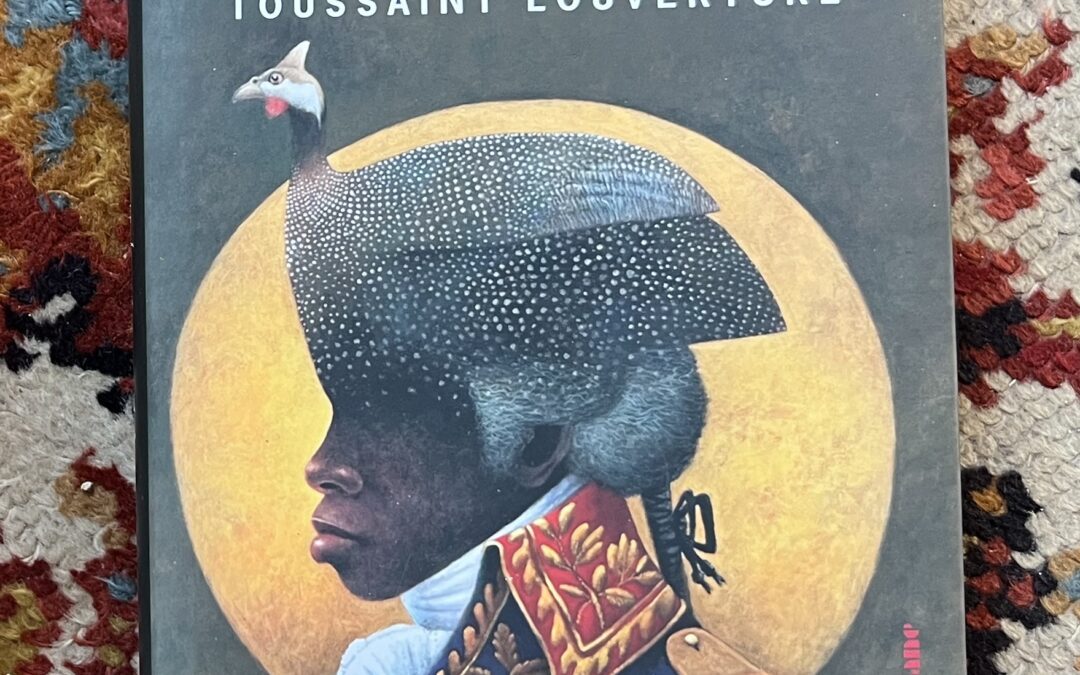
As a rule, I refrain from buying bananas once outside of the Caribbean. However, yesterday, amid a garden of tulips and wildflowers outside of Prague, Czech Republic, I skimmed Black Spartacus: The Epic Life of Toussaint Louverture by Sudhir Hazareesingh—from my host’s eclectic collection—while nibbling on a banana.
In essence, Black Spartacus recounts the story of Louverture—or as I prefer to write it, L’Ouverture— a former slave who rose to become governor of St Domingue, as Haiti was then known, navigating triumphs and frustrations, diplomacy and manipulations, only to meet his end in a fortress in France.
Philippe Rose Roume de Saint-Laurent, a French-Creole born in Grenada, is best known for negotiating migration to neighbouring Trinidad from the French Caribbean islands via the 1783 Spanish Cedula of Population. I hadn’t realised that Saint-Laurent had also ventured to St Domingue, where he and L’Ouverture developed a relationship, trusting each other as fellow West Indians, with Saint-Laurent eventually becoming sole agent for France there. Apart from Henry Christophe, I hadn’t considered another Grenadian’s involvement in the history of St Domingue/Haiti, as we were not taught much outside of British colonial history during my schooling days. Come to think of it, I’m not even sure if that has changed in today’s curriculum.
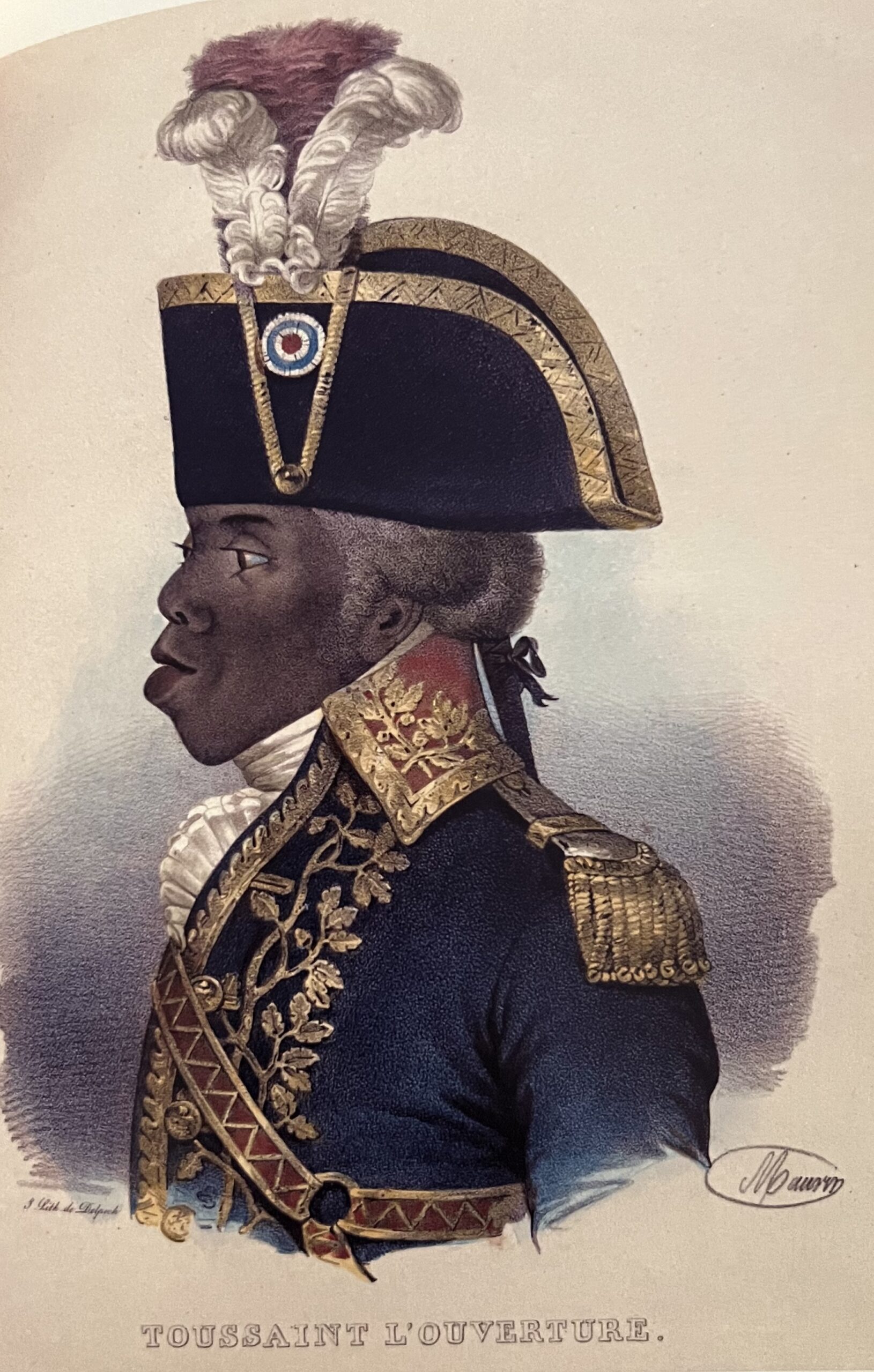
Image taken from Black Spartacus: Lithograph by Nicolas-Eustache Maurin, France 1832, apparently based on original painting L’Ouverture gave to Saint-Laurent.
Sharing this revelation with my host brought to mind—once again from his eclectic collection—2 songs from the brilliance of David Michael Rudder: Haiti and The Banana Death Song.
The opening lines of Haiti evoke L’Ouverture as a mighty black man who walked through Napoleon; the famous chorus Haiti I’m sorry is what the song is best remembered for. Given the current state of events in Haiti, apologies are not enough; immediate and concerted action is needed to stabilise the lives of the general population impacted by political intrigue. However, clumsy foreign intervention—or intervasion, as per Alister Hughes’ description of the Grenada Revolution—will not suffice. While I applaud Caricom’s desire to assist a member state, the elitist-sounding name given to the group—the Eminent Persons Group—rankled me, but that’s just me being pedantic. Ultimately, it is Haitians who must decide the governance of Haiti. In my opinion, Caricom should support the People of Haiti, aligning with its stated vision of “a Community where every citizen is secure and has the opportunity to realise his or her potential with guaranteed human rights and social justice; and contributes to, and shares in, its economic, social and cultural prosperity.” Here ends my rant.
The Banana Death Song begins with notes from the US anthem and narrates the history and subsequent downfall of the Caribbean banana industry. Uncle Sam, the bearded symbol of the US Government, visits the church (stronghold) of bananas in the Caribbean—because he likes the way they preach in the Caribbean chapter—falling in love with the girls (banana industry) of Grenada, Jamaica, and St Lucia. Subsequently, on a visit to South America, Uncle Sam is enchanted by Chiquita who holds such sway over him, resulting in a bleak future for the West Indian girls/banana industry. Until yesterday, I don’t believe I had ever paid attention to that song.
It’s amazing the connections one can make to Grenada, so far away from home. My yard is full of bananas, and going forward, with every banana I eat, the L’Ouverture-Saint-Laurent Haiti-Grenada relationship, Rudder’s song, and by extension, the loss to Grenada’s banana industry, will replay in my mind.