
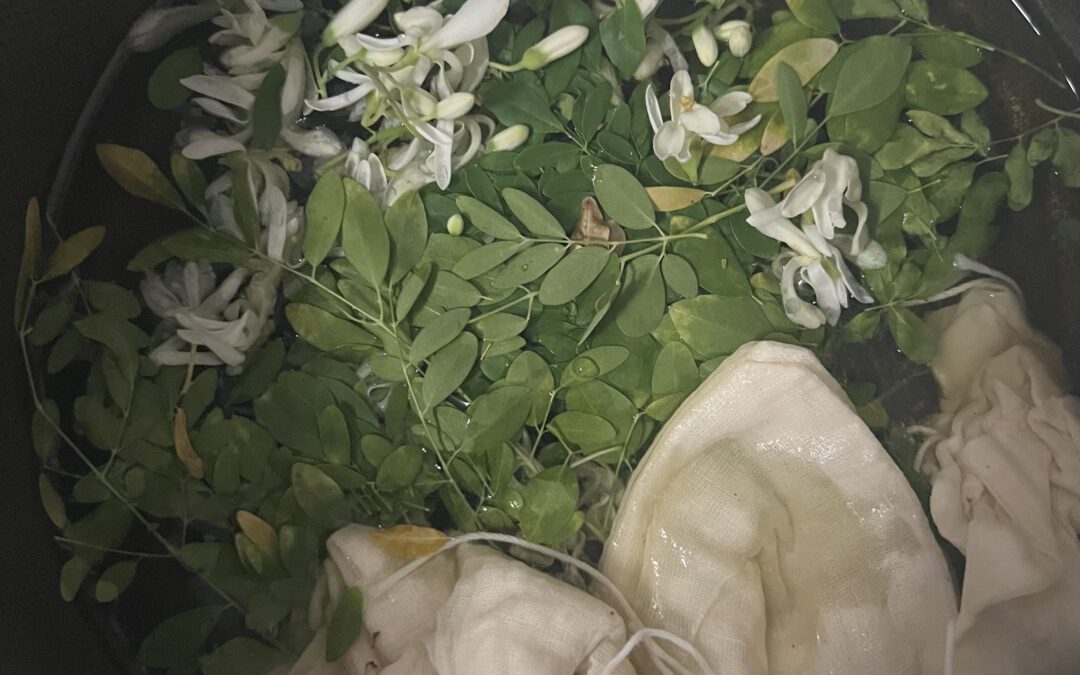
Teacups and saucers evoke memories of my Grenadian grandmother helping to organise tea things—from cakes and pastries to tablecloths and brown glass crockery, and oftentimes both—for Mothers’ Union, Red Cross and various church teas. Because tickets had been purchased to support the same events she donated to, we children were strongly encouraged to attend. We were often served by the same buxom girdled women, many of whom were members of at least two of the tea organisations.
Despite generations of Caribbean grandmothers steeping leaves, roots and stems to make tea, these community teas used English brands Lipton and Red Rose; the latter being more economically elastic. By the time we got home, gran would know how many cakes we ate, and more importantly, if we behaved ourselves as family ambassadors.
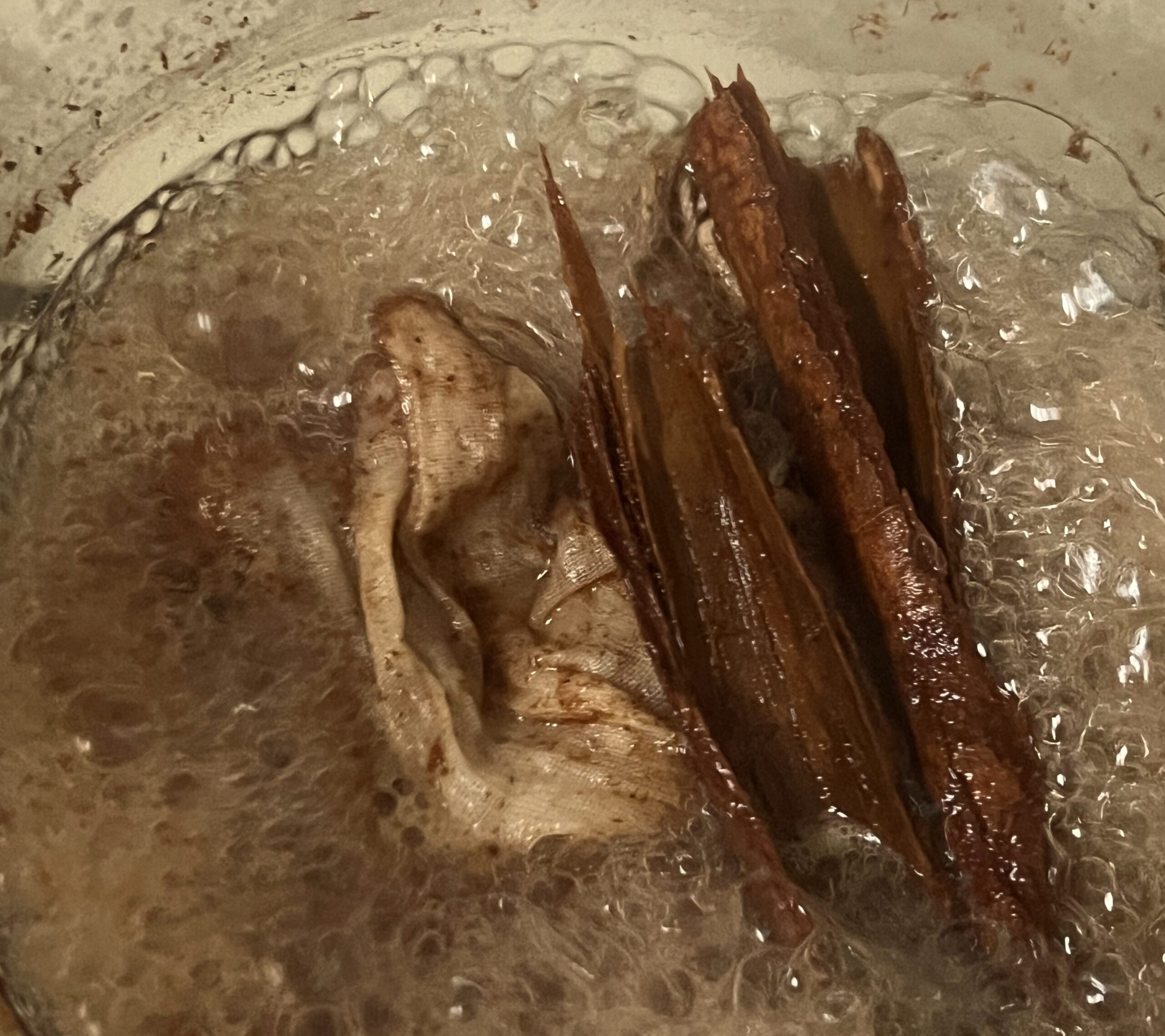
Teabags soaking in scalding cinnamon tea. Photo: SLCT
In contemporary times, thankfully, home brews of mango, moringa, soursop leaf, ginger, turmeric, cinnamon, lemongrass, blue pea flower, and more than a handful of various ‘bush’ are on menu offerings—most best sipped slowly, plain, or with a smidge of honey or milk. I believe that offering tea crafted from elements grown in Grenada goes beyond extending Caribbean hospitality. It reinforces use of ancestral wisdom and the practice of consuming locally grown produce, strengthening the Grenadian identity.
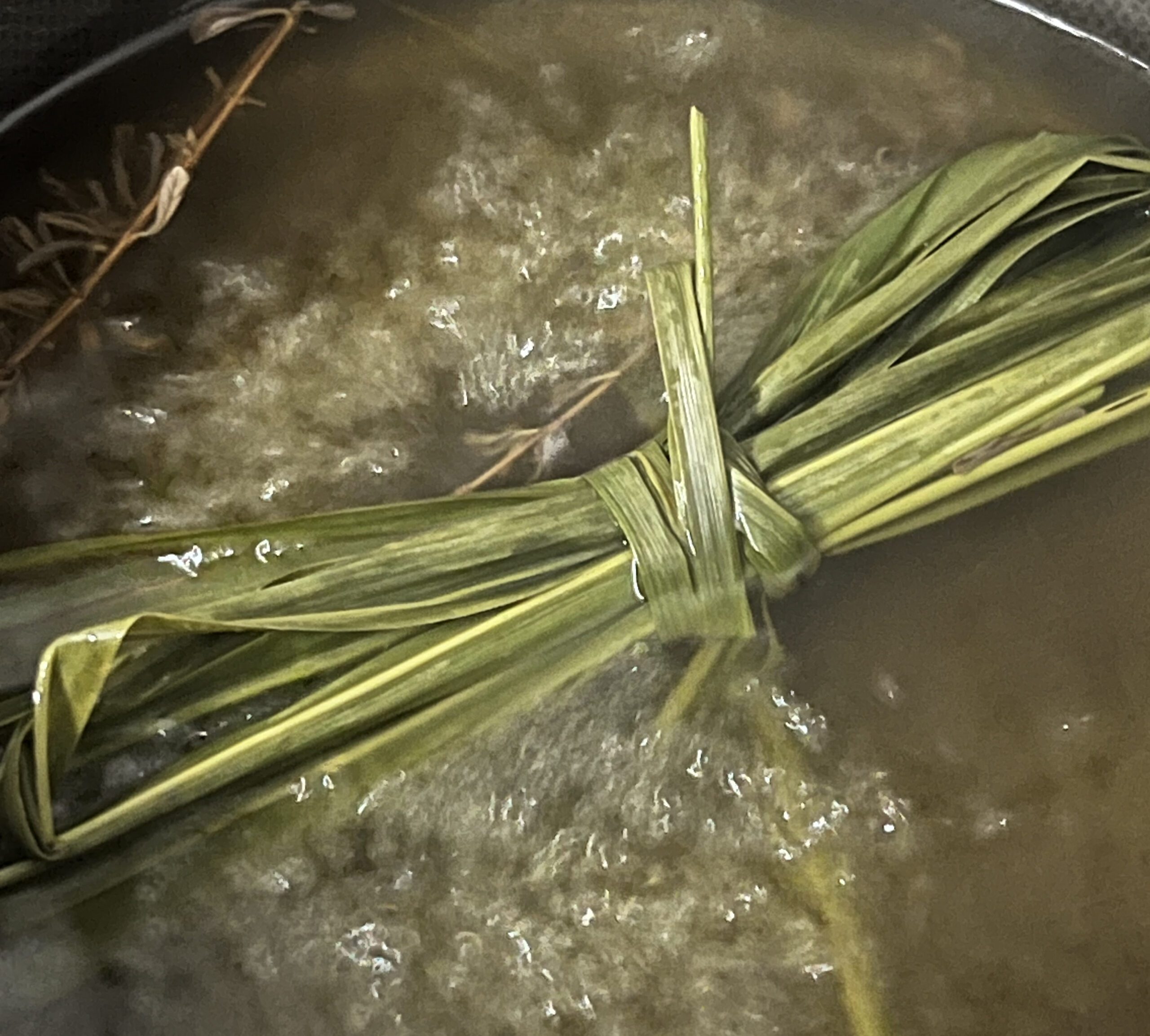
Teabags soaking in scalding lemongrass and thyme tea. Photo: SLCT
At home, I grow and make tea from lemongrass, turmeric, soursop and moringa to help my body heal. Clustered teabags stained with teas of cancer-fighting spices are part of my fabric and metal installations Foreigner Within: My own Power and Knowing, at the Grenada Pavilion, of the Venice Biennale.
#nomanisanisland #grenadavenicepavilion #biennalearte2024 #foreignerseverywhere #StranieriOvunque #artstungingrenada #suelinlowchewtung #foreignerwithin